Community Platform for Associations: The Proven Guide to Member-Driven Growth
Table of Contents
Associations are built on the principle of connection. Members join because they want access to a professional community, relevant resources, and opportunities to grow within their field. Delivering on that promise requires more than goodwill — it requires the right infrastructure.
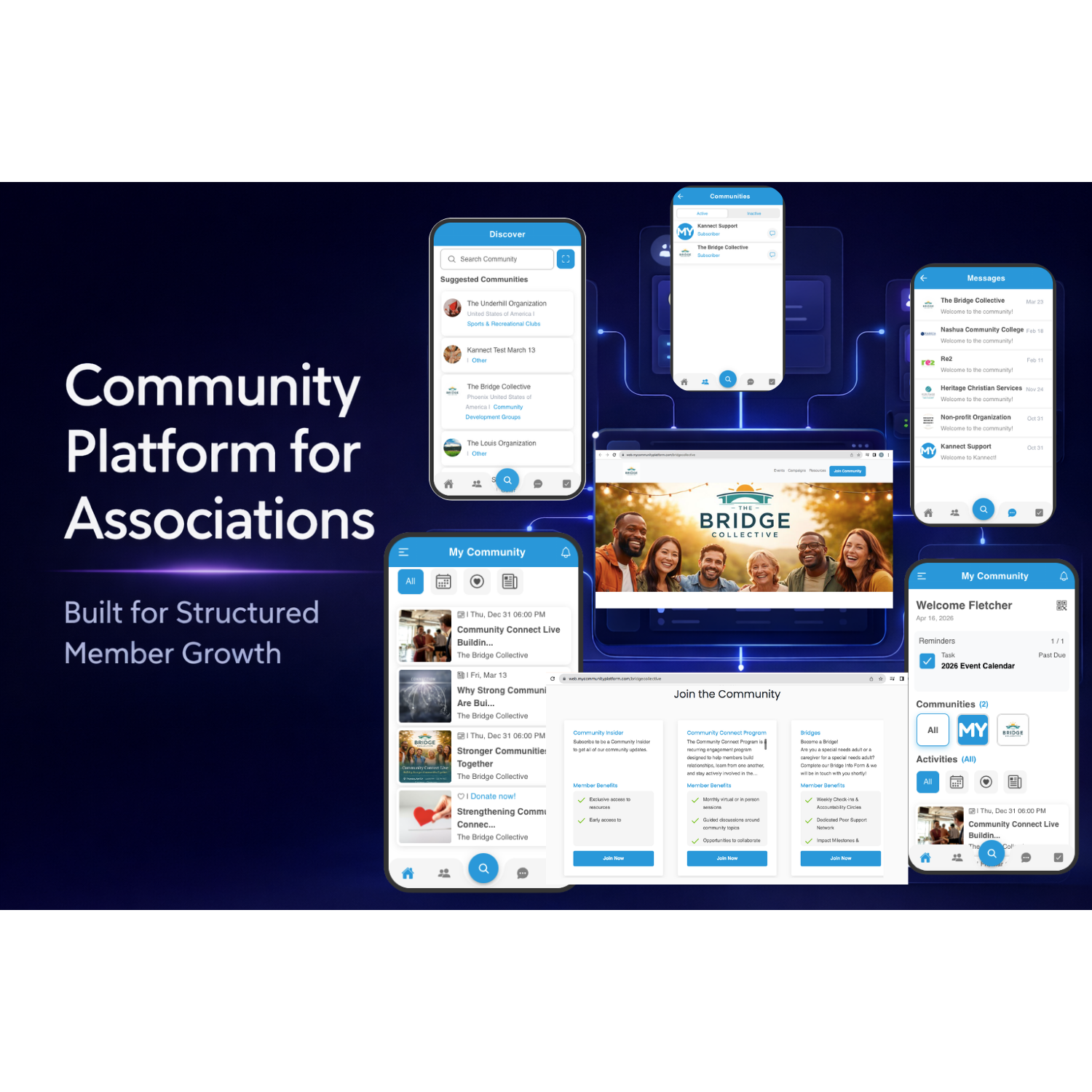
A community platform for associations provides that infrastructure. It brings together the tools and systems that associations need to manage members, run events, communicate effectively, and track engagement, all within one branded environment.
This guide explains what a community platform for associations is, how it works, and what to consider when choosing one.
What Is a Community Platform for Associations
A community platform for associations is a software system designed specifically to support the operational and engagement needs of membership-based organizations. It is not a general-purpose tool adapted for association use but a purpose-built platform aligned with how associations actually function.
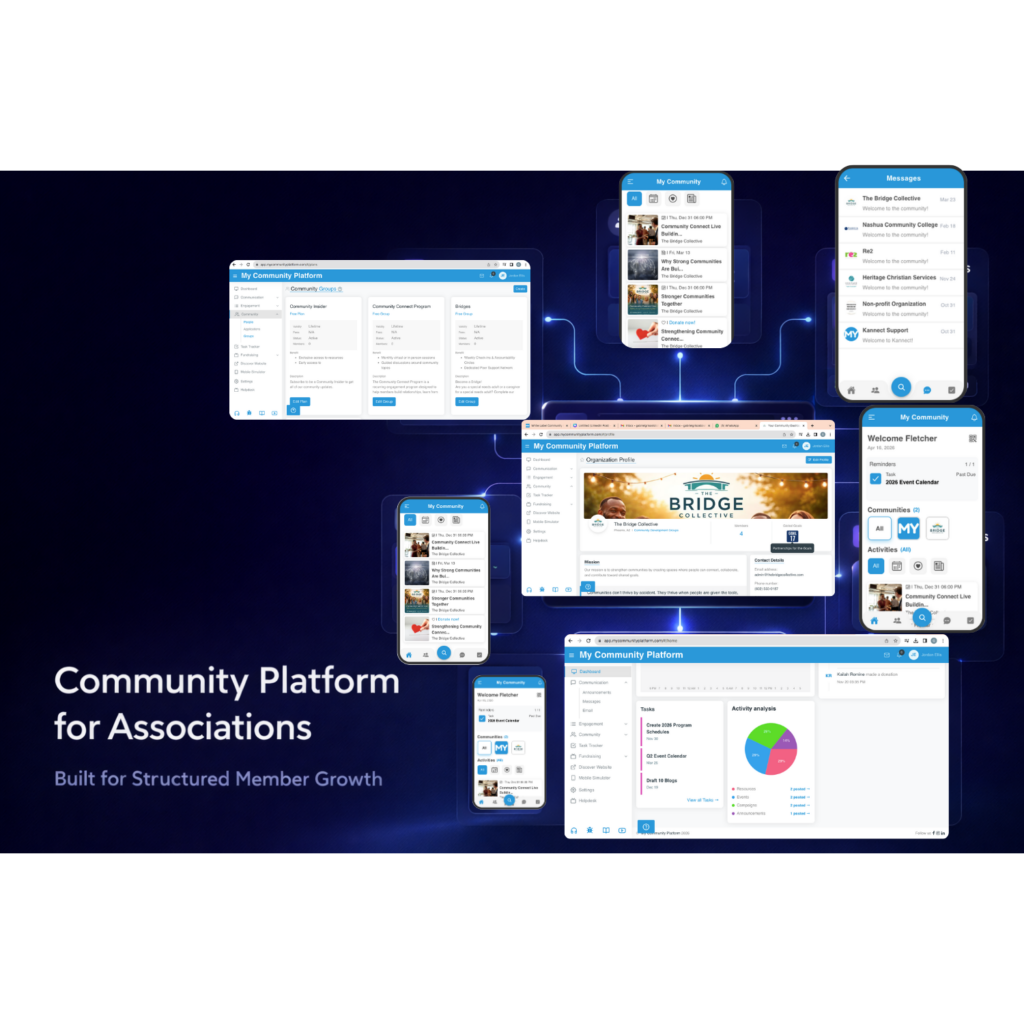
The platform serves as the central hub for all member-facing activity. Members can access resources, register for events, update their profiles, connect with peers, and communicate with the organization through one consistent environment.
On the administrative side, staff use the same system to manage member records, create events, send communications, and monitor engagement. Because everything is connected, updates flow through the system without requiring manual data transfers or reconciliation between separate tools.
How a Community Platform for Associations Works
At its core, a community platform for associations operates around a member database that drives all other functionality. When a new member joins, their record is created in the database and immediately available across all connected features — communication, events, content access, and reporting.
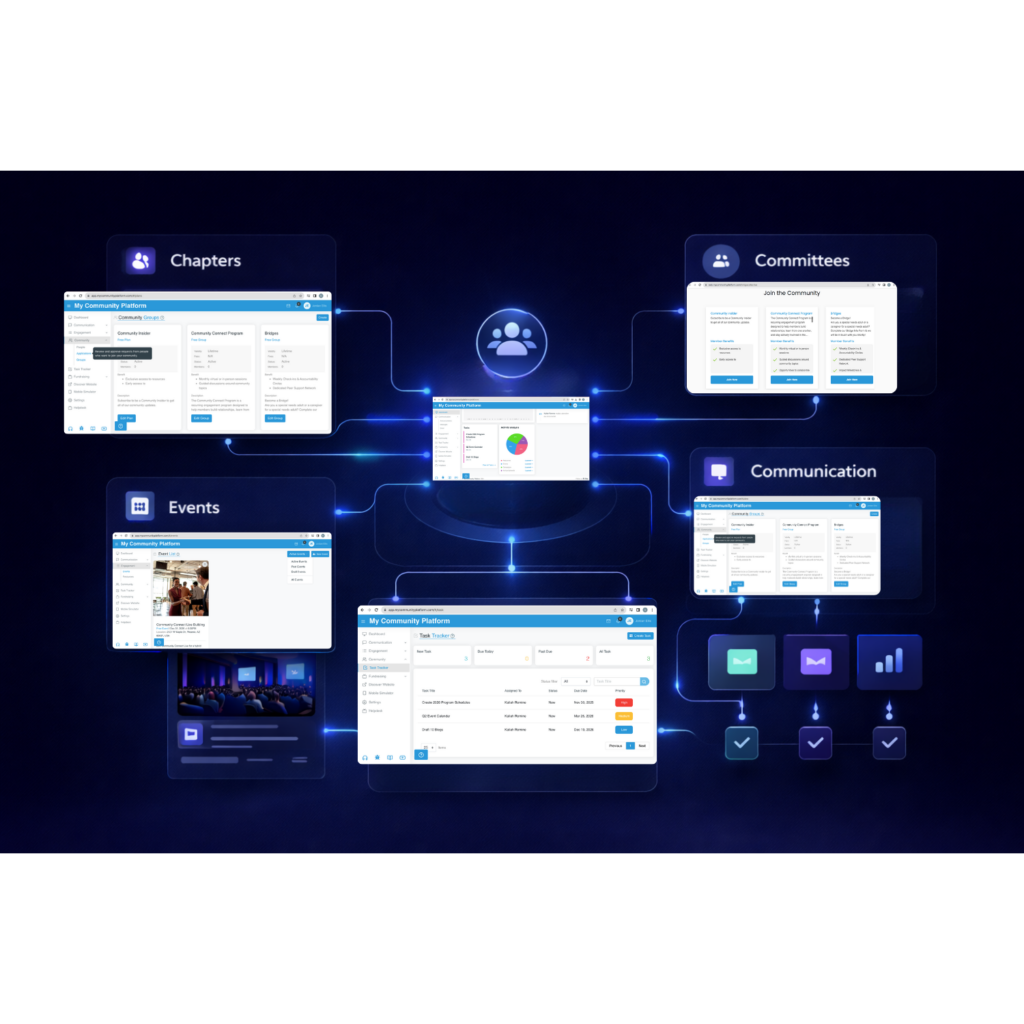
The platform is organized to reflect how associations are structured. It supports membership tiers, chapter hierarchies, committee assignments, and role-based access, which means the experience each member sees is relevant to their specific relationship with the organization.
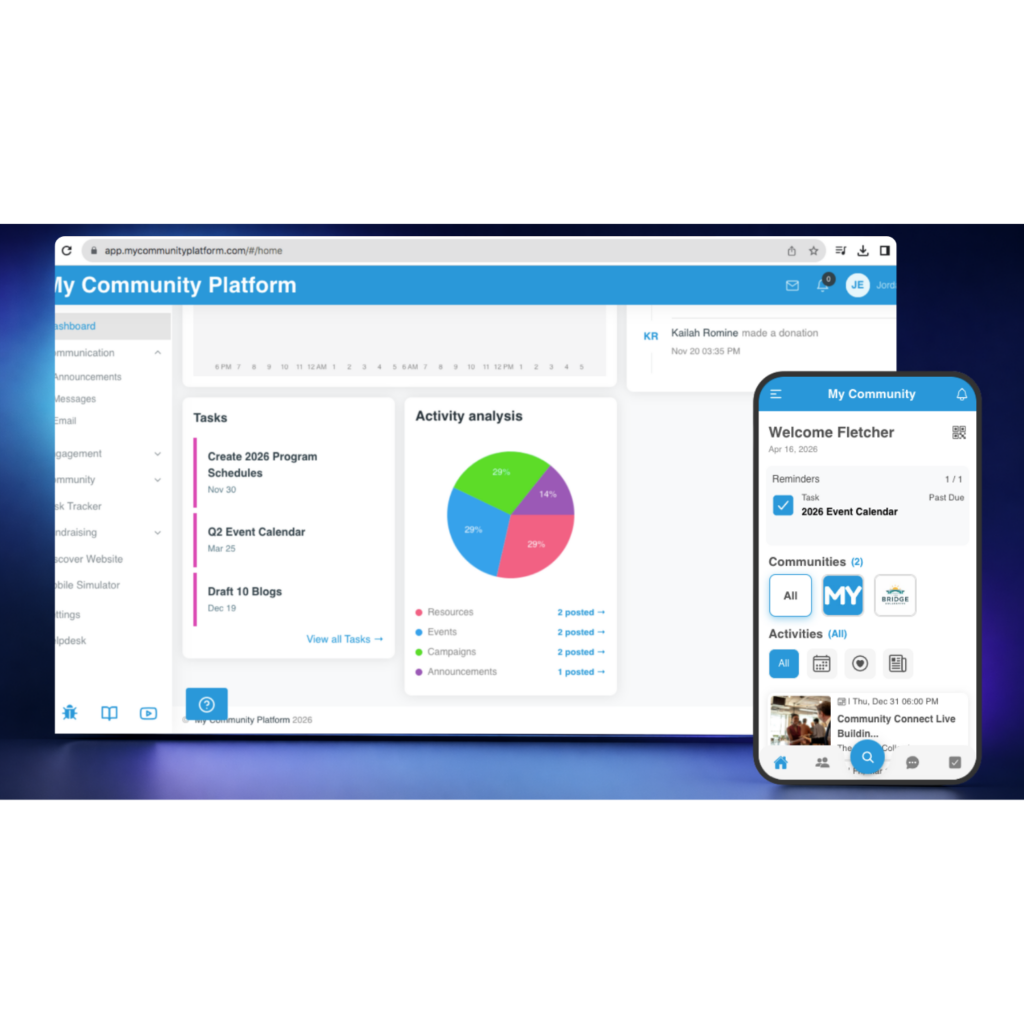
Staff access an administrative dashboard that provides real-time visibility into member activity. This makes it easier to identify engagement trends, follow up with inactive members, and evaluate which programs are delivering the most value to the membership.
Community Platform for Associations vs. General Software Tools
Many associations start with tools that were not built for their specific operational model. Email marketing platforms, event ticketing software, spreadsheets, and social media groups are common combinations that can get an association through its early stages.
As membership grows and programming expands, these tools create friction. Data lives in separate systems, communication lacks the personalization members expect, and events are managed through platforms that have no connection to the member database.
A purpose-built community platform for associations eliminates this friction. The tools were designed to work together for exactly the kind of organization an association is, which means the platform delivers more value with less administrative overhead.
Community Platform for Associations vs. Association Management Software
Association management software, often called AMS, is a category of tools focused primarily on back-end operations such as dues processing, member records, and financial reporting. While these functions are important, they represent only part of what an association needs to operate effectively.
A community platform for associations places equal emphasis on the member-facing experience. It is built for engagement as much as administration, which means the features that members interact with directly are as well-developed as the tools staff use behind the scenes.
Organizations that need both strong back-end administration and a robust member experience often find that a modern community platform provides a more complete solution than a traditional AMS.
Key Features of a Community Platform for Associations
A community platform built for associations includes features that support the full breadth of association activity.
Member management tools allow associations to track membership status, renewal dates, contact information, and engagement history for every member. Event management capabilities support the creation, promotion, and administration of conferences, workshops, webinars, and networking events.
Chapter and committee management allows associations to organize members into subgroups, assign roles, and manage communication at the group level. Content libraries provide access to exclusive resources, publications, and professional development materials. Reporting tools give leadership visibility into membership trends, event participation, and revenue.
Who Benefits Most from a Community Platform for Associations
Community platforms for associations are valuable for any membership-based organization, but certain types of associations benefit most from a purpose-built solution.
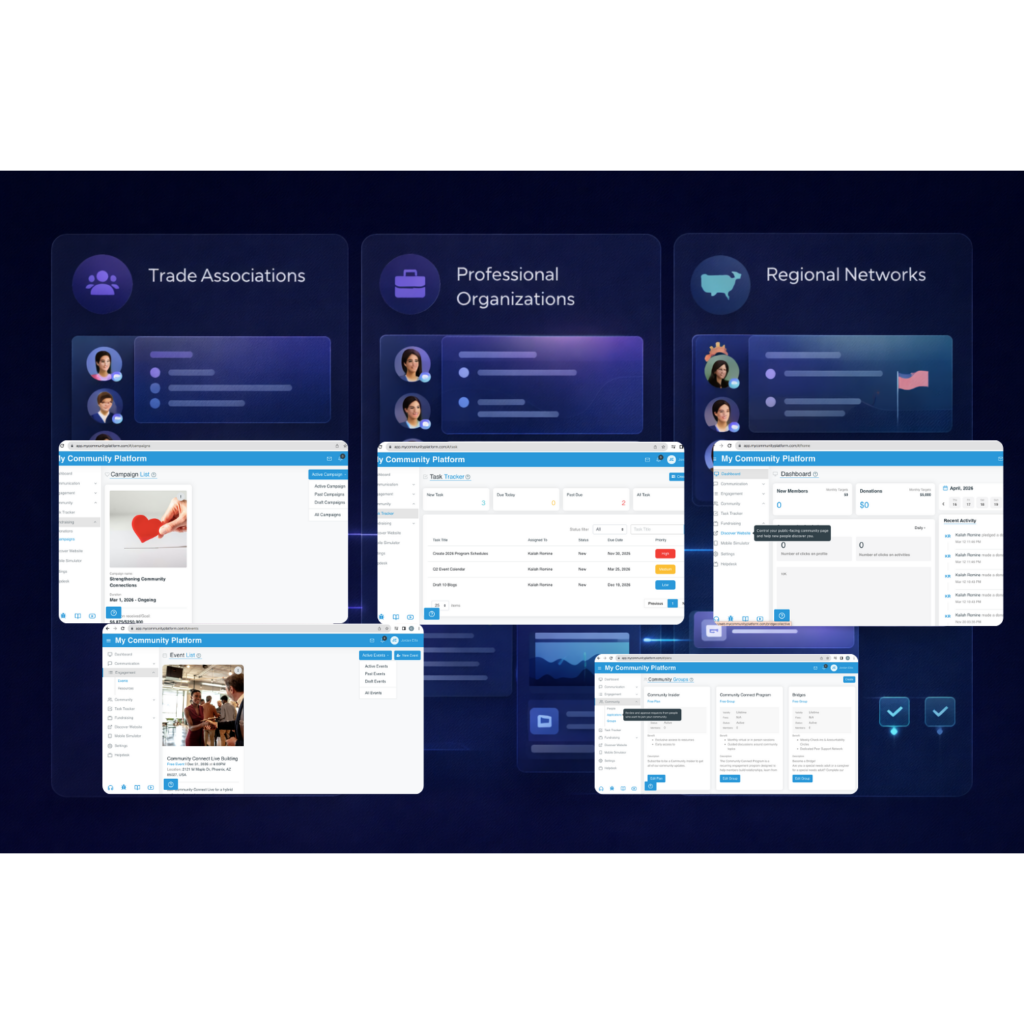
Trade associations with large memberships across multiple regions or chapters benefit from the ability to manage complex structures within one platform. Professional associations that offer continuing education and credentialing programs benefit from integrated content management and event tools.
Smaller associations benefit from the operational efficiency that comes from consolidating multiple tools into one. A small staff can manage a much larger community when the tools are designed to work together rather than requiring manual coordination.
Benefits of a Community Platform for Associations
The most immediate benefit for associations is the reduction in operational complexity. Managing members, events, communication, and content through separate systems requires significant staff time and creates risk of errors. A unified platform eliminates that complexity.
For members, the benefit is a consistent, professional experience. When everything related to their membership is accessible through one branded environment, they are more likely to engage regularly and perceive the association as organized and invested in their experience.
For leadership, the benefit is visibility. Real-time data on membership trends, event participation, and engagement levels allows boards and executive directors to make informed decisions about programs, dues structures, and member services.
How to Choose the Right Community Platform for Associations
Choosing a community platform for associations requires evaluating both the current needs of the organization and its plans for growth.
Start by mapping the current state. What tools does the association currently use for member management, events, and communication? Where are members experiencing friction? Where are staff spending the most time on manual work? The platform should directly address the most significant pain points.
Evaluate the platform’s ability to support the association’s specific structure — chapters, committees, membership tiers — and confirm that it can grow with the organization. The quality of implementation support is also important, since the transition from existing tools to a new platform requires thoughtful planning and guidance.
Final Thoughts
A community platform for associations is not simply a software purchase. It is a commitment to the member experience and an investment in the operational foundation that determines how effectively the association can fulfill its mission.
Associations that invest in a purpose-built platform consistently find that it changes how members engage with the organization. When the experience is professional, centralized, and consistent, members show up more often, renew at higher rates, and refer others to join. That is the outcome a community platform is designed to deliver.
Where to Go From Here
If your association is managing members and programs across multiple tools, the question is not whether a unified platform would help — it is how quickly you can make the transition.
Every month that members navigate a fragmented experience is a month where engagement is lower than it could be and renewal risk is higher than it needs to be. The operational cost of the current approach rarely shows up on a single budget line, but it accumulates over time.
My Community Platform is built specifically for organizations like yours. It gives associations a fully branded, centralized environment for managing members, events, and communication, with the structure to support chapters, committees, and membership tiers.
Frequently Asked Questions
What is a community platform for associations in simple terms?
A community platform for associations is software built specifically for membership organizations. It centralizes member management, events, communication, and engagement tracking in one branded system, replacing the mix of general-purpose tools that most associations currently use.
How is a community platform different from traditional association management software?
Traditional association management software focuses primarily on back-end operations like dues processing and member records. A community platform includes these functions but also places significant emphasis on the member-facing experience, including the portal, event tools, and communication capabilities.
Can a community platform support chapters and committees?
Yes. Purpose-built community platforms for associations are designed to support complex organizational structures, including chapters, committees, membership tiers, and role-based access. Members see content and functions relevant to their specific role within the organization.
What size association benefits most from a community platform?
Associations of all sizes benefit, though the impact is often most visible for mid-sized and growing associations that have outgrown a simple combination of general tools but have not yet invested in a purpose-built solution. Smaller associations also benefit significantly because the operational efficiency allows a small staff to manage a much larger community.
How long does it take to launch a community platform for an association?
Timeline depends on the platform and the complexity of the association’s existing data, but modern platforms designed for non-technical teams can typically be configured and launched in a matter of weeks. This is considerably faster than custom-built alternatives, which can take months or years.
Why do associations switch from their current tools to a community platform?
Most associations switch when the cost of managing multiple disconnected tools becomes clear — in staff hours, member confusion, and missed engagement. A community platform consolidates these functions into one system, reducing overhead and creating a more consistent experience for members and staff.